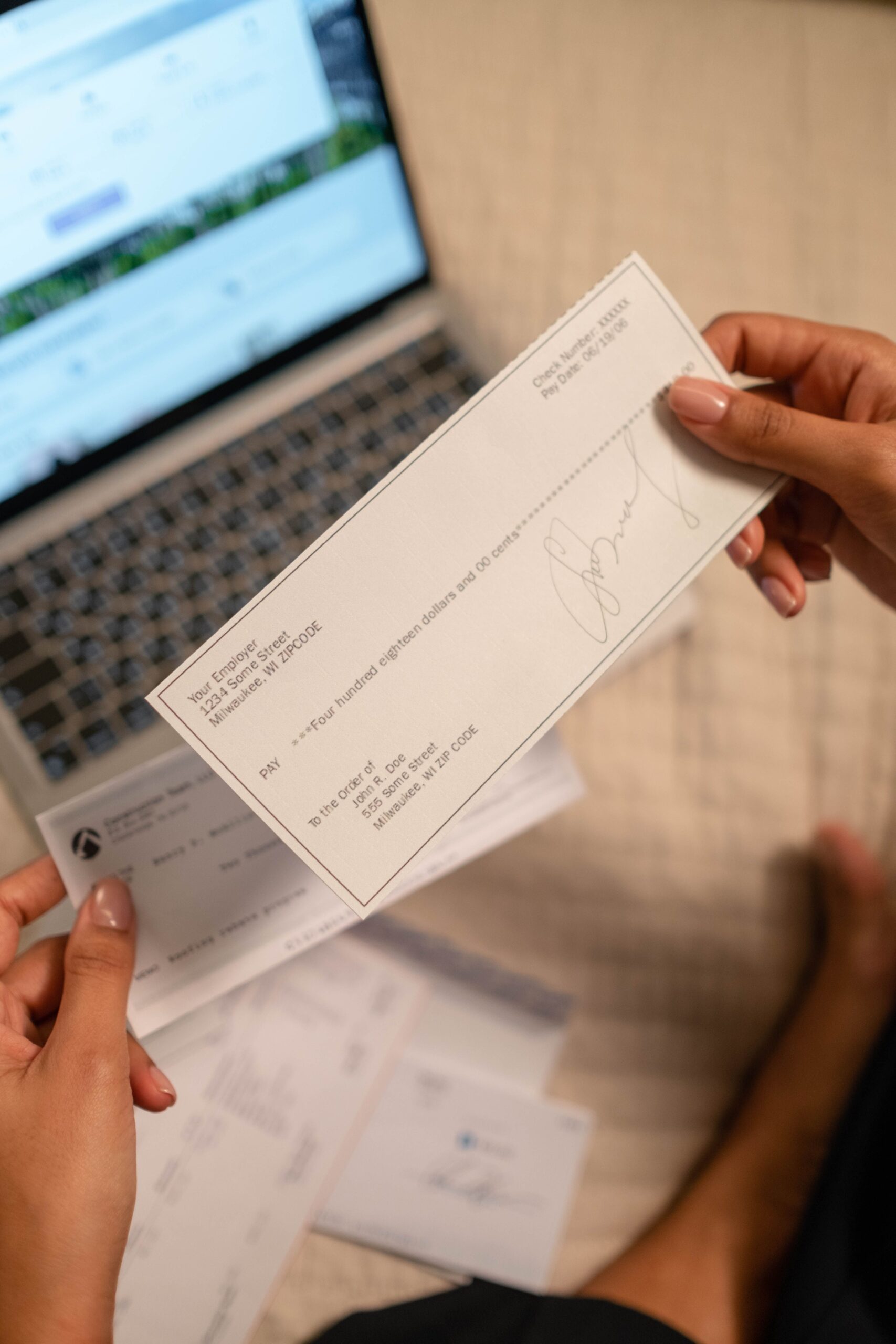
A check that looks completely real, printed on legitimate bank stock, with a valid routing number, can still be worthless. Fake check and overpayment scams rely on a timing gap most people don’t know exists: banks often make deposited funds available days before they’ve actually confirmed the check is good. By the time it bounces, the scammer already has your money, and you’re liable for the full amount.
How the Scam Works
Pattern 1: The Overpaying Buyer
A buyer on Facebook Marketplace, Craigslist, or a similar site sends a check for more than the asking price, then explains it was a mistake and asks for the difference to be sent back, often through a wire transfer or gift cards. The original check later bounces, leaving the seller out both the refund and the item, if it already shipped.
Pattern 2: The Rental Deposit Overpayment
A prospective tenant sends a landlord a check that’s larger than the required deposit, citing a moving-company or “typo” excuse, and asks for the excess back quickly. Landlords who refund it before the check clears lose the refunded amount once the original payment is reversed.
Pattern 3: The Fake Employer Advance
A new “employer” sends a check described as an advance for home-office equipment, then instructs the new hire to purchase specific software, gift cards, or supplies from a particular vendor and send back the codes or receipts. The equipment purchase is the actual scam, the job itself was never real.
Pattern 4: The Convincing Cashier’s Check or Money Order
Counterfeit cashier’s checks and money orders are printed to closely mimic real ones and can pass a teller’s initial glance. Banks frequently credit the funds provisionally within a day or two, but full verification with the issuing bank can take one to three weeks, and that’s when the fake is caught.
A Composite Example (Illustrative, Not a Real Case)
Imagine someone lists a used car online, and a buyer offers to pay by cashier’s check, sending an amount several hundred dollars over the asking price to “cover shipping,” and asking for that difference back via wire before picking up the car. The seller’s bank shows the check as deposited and available within a day, so the seller wires the overage back immediately. Two and a half weeks later, the bank notifies the seller the cashier’s check was counterfeit, reverses the full deposit, and the seller is out both the wired amount and the car, which the buyer collected before the check bounced. This scenario is a composite built from commonly reported patterns — it does not describe a real person, buyer, or event.
Red Flags That Get Missed
- A check or money order for more than the agreed amount, with a request to send back the difference.
- Pressure to refund, wire, or purchase gift cards quickly, before the check has had time to fully clear.
- A buyer, tenant, or employer who avoids meeting in person or speaking by phone.
- Funds showing as “available” in your account shortly after deposit, which is not the same as the check being confirmed genuine.
- Any request to buy gift cards, software licenses, or supplies on someone else’s behalf using their check.
- A transaction that only makes sense if you act before verifying anything.
How to Protect Yourself
- Never send money back for an overpayment — ask the payer to cancel and reissue the correct amount instead, or simply decline the transaction.
- Wait for full clearance, not just “available” status — ask your bank how long final verification takes for the specific check type, which can be one to three weeks.
- Prefer in-person cash, or verified electronic payment for local sales, and avoid accepting checks from buyers you’ve never met.
- Never buy gift cards, software, or equipment on an employer’s behalf using funds they sent you — legitimate employers handle their own purchasing.
- Call the issuing bank directly, using a number you look up independently, to verify a cashier’s check or money order before relying on it.
- Treat urgency as a warning sign — genuine buyers, tenants, and employers rarely need you to act within hours.
If You’ve Already Been Targeted
If you’ve already wired money, sent gift card codes, or shipped goods in response to a check that later bounced, contact your bank immediately to report it and ask whether a stop or recall is still possible, though recovery is often limited once funds have moved. Ask your bank for a written explanation of the reversal and keep copies of the check, any correspondence, and proof of what you sent in return. If goods or a vehicle already changed hands, treat this as a fraud loss and file a report rather than attempting to chase the buyer directly.
Report the incident to your bank’s fraud department and to your country’s official cybercrime or fraud authority:
- United States: FBI Internet Crime Complaint Center (IC3) — ic3.gov
- United Kingdom: Action Fraud — actionfraud.police.uk or reportfraud.police.uk (0300 123 2040)
- Canada: Canadian Anti-Fraud Centre — antifraudcentre-centreantifraude.ca, report at reportcyberandfraud.canada.ca
- Australia: Scamwatch (National Anti-Scam Centre / ACCC) — scamwatch.gov.au, report at scamwatch.gov.au/report-a-scam
If you’re outside these countries, search for your national police cybercrime reporting unit or financial regulator — most countries now have a dedicated online reporting channel.
Frequently Asked Questions
If my bank shows the check as “cleared,” does that mean it’s genuine?
Not necessarily. Banks are often required to make funds available within a day or two under regulations meant to speed up access to money, but that’s separate from the issuing bank actually confirming the check is legitimate, which can take one to three weeks for certain check types.
Am I responsible for the money if a fake check I deposited gets reversed?
Generally yes. If you spent, wired, or refunded any of the funds before the check was fully verified, you’re typically liable for the full amount once your bank discovers it was counterfeit, regardless of how convincing the check appeared.
Is it ever normal for a buyer or employer to overpay by check?
Genuine overpayments do occasionally happen, but the safe response is always to ask them to correct it directly with a new check or payment, rather than sending money back yourself before the original has fully cleared.
What’s the safest way to accept payment for something I’m selling locally?
In-person cash or a verified instant payment method for a low-value item is generally safest. For higher-value items like vehicles, meeting at your own bank and having the buyer’s payment verified on the spot removes most of the risk.
Can I recover money I already wired back to a scammer?
It’s difficult but not always impossible. Contact your bank and the money transfer service immediately, since a small window sometimes exists to halt a transfer, though once funds are collected by the recipient, recovery is unlikely.
Browse more resources in our Scam Awareness category.